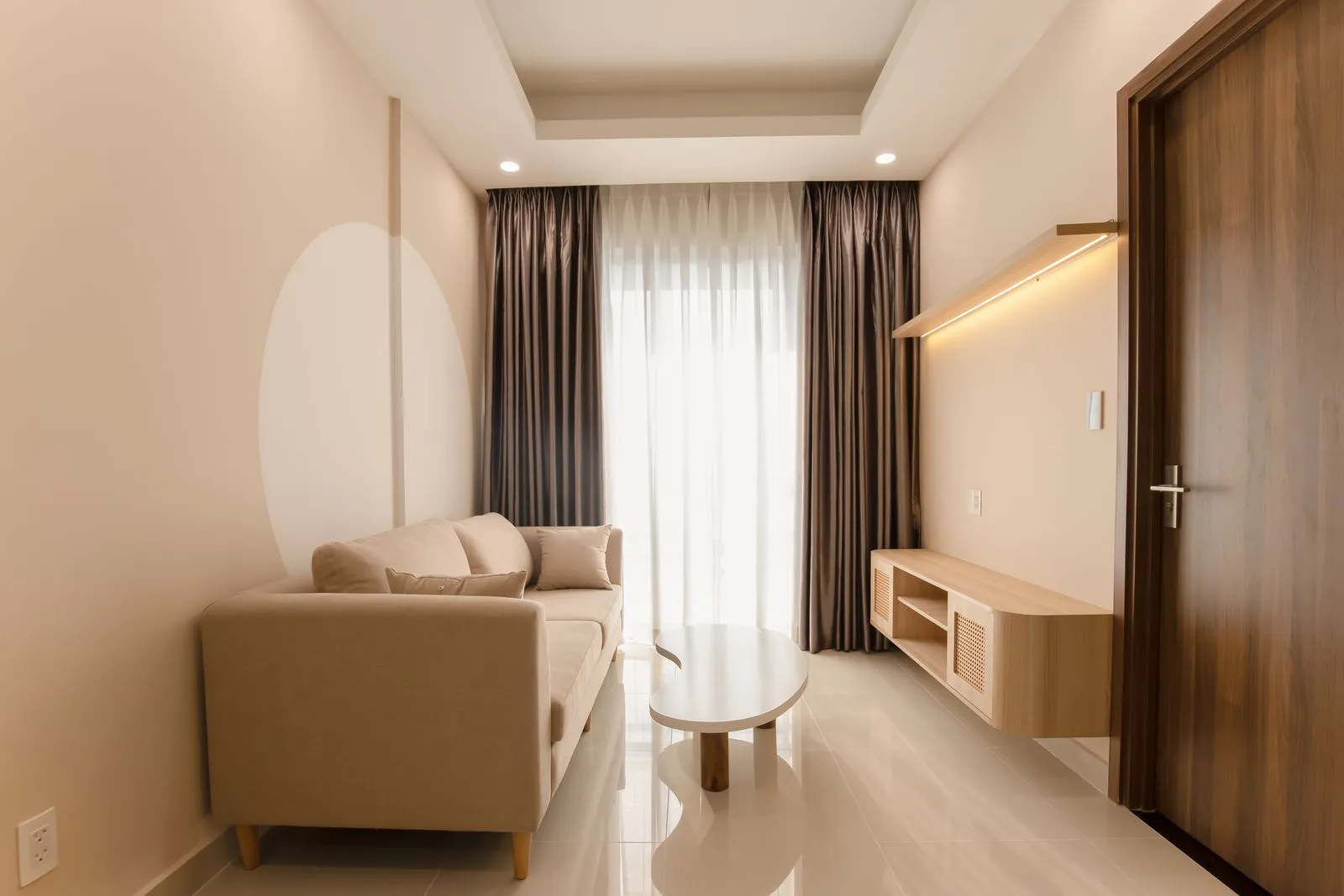
A small apartment can feel comfortable and welcoming without feeling crowded. The key is to make it easy to move through the rooms and give the eye a few calm, open areas to rest. You do not need to remove everything or buy all new furniture. Start by looking at how you use each space, then adjust furniture placement, pathways, and everyday storage so your home works better for you.
Plan Around Clear Walkways
Notice the routes you take every day: from the entry to the kitchen, between the sofa and the coffee table, or from the bed to the closet. Keep these paths as direct as possible. Move furniture that forces you to sidestep or squeeze past, and avoid placing baskets or small tables where they interrupt the natural flow of the room.
Before moving heavy pieces, sketch the room or mark possible furniture positions with painter’s tape. Leave enough room to walk comfortably and open doors, drawers, and cabinets fully. In a narrow living room, placing the sofa along the longest wall may create a more straightforward route than floating it in the center.
Choose Furniture That Fits
A few appropriately sized pieces often work better than many small ones. Oversized furniture can block routes and dominate the room, while too many compact pieces can make the space feel busy. Measure the room and the furniture before rearranging, including the clearance needed to pull out a chair or open a sleeper sofa.
Look for pieces that serve more than one purpose, such as an ottoman with storage or a dining table that can double as a work surface. Keep useful seating, but consider whether every side table or accent chair earns its place. If a piece is rarely used and consistently gets in the way, try moving it to another room before deciding whether to keep it.
Reduce Visual Clutter
Open surfaces help a room feel calmer, but they do not need to be completely bare. Group everyday items on a tray, use a basket for blankets, and give frequently used belongings a consistent home. Store less attractive necessities inside closed cabinets or containers when possible, while keeping items you use often within easy reach.
Edit what is visible on shelves and counters. Leave some space between objects, arrange books in a few tidy groups, and avoid spreading small decorations across every surface. In a small apartment, a limited color palette for storage bins and accessories can help separate items feel more unified without making the home feel plain.
Use Light and Sightlines
Keep windows as unobstructed as practical. Position furniture so it does not block daylight, and choose window coverings that can be pulled back easily. A mirror placed where it reflects natural light or a pleasant view can add a sense of depth, but it works best when it does not reflect a cluttered corner.
Pay attention to what you see from the entry and from the main seating area. A clear view toward a window or an uncluttered wall can make the room feel more open. If shelves or storage must sit in a passage, keep their contents organized and avoid extending objects into the walkway.
Make one change at a time: clear a pathway, reposition a large piece, or organize a crowded surface. Live with the adjustment for a few days and notice whether the room feels easier to use. Small, thoughtful edits can preserve the comforts you enjoy while making your apartment feel more open. If you would like help arranging an occupied home, Bluegrass Home Staging can help you explore practical options.